
What Waiting Costs You
A garage door that's slipped off its track doesn't fix itself, and it doesn't stay the same size of problem if you leave it. What starts as a door that's crooked in the opening or won't move past a certain point can turn into a bent track, a torn panel, or a door that comes down crooked and jams halfway — sometimes with a car still underneath it. Left through a Charles County winter, with ice adding weight and cold making metal brittle, a door hanging on even one or two rollers can go from "annoying" to "on the garage floor" in a single cold snap. The repair that might have cost a few hundred dollars to correct early often turns into a full panel or door replacement once the track bends badly enough or the opener motor burns out trying to force a door that physically can't travel straight.
What "Off the Track" Actually Means
Garage doors ride on rollers that sit inside a metal track on each side. When a roller jumps out of that track — from a worn roller, a bent track, an obstruction, or cables under uneven tension — the door no longer moves on a predictable path. Sometimes it's subtle: one bottom corner hangs slightly lower than the other, or the door sticks a few inches before stopping. Sometimes it's obvious: the door is visibly crooked, won't close flush with the frame, or has partially fallen and is wedged at an angle. Both versions are dangerous, because the door is now held up by fewer points of support than it was designed for, and the torsion or extension springs are still under full tension trying to do a job the hardware can't finish safely.
How It Happens Around Here
In this part of Maryland, a few local conditions make derailments more common than homeowners expect. Heavy rain and humidity swell wood-framed openings and corrode unprotected hardware over time, which loosens the track brackets holding everything in alignment. Icy winters add weight to the door itself and make metal tracks contract, which can widen gaps just enough for a roller to pop loose on a cold morning. And because White Plains and the surrounding area have such a mix of older homes with original hardware and newer builds with modern openers, track wear shows up at very different ages — a 30-year-old steel track that's never been adjusted is just as likely to fail as a newer one with a single bent spot from an impact.
What to Do Immediately
If you notice the door hanging unevenly, grinding, or stuck mid-travel, stop operating it right away. Continuing to run the opener against a derailed door is how a small problem becomes a torn panel or a snapped cable.
- Stop using the opener. Don't press the remote or wall button again once you notice the door isn't moving normally.
- Leave the door exactly where it is. If it's partway open or closed, resist the urge to force it the rest of the way by hand.
- Keep the area clear. Move vehicles, bikes, or people out from under and in front of the door. A door on a compromised track can shift without warning.
- Look, but don't touch. From a safe distance, check whether the door is still on the track on both sides, whether a cable looks loose or frayed, and whether the track itself is visibly bent or pulled away from the wall.
- If a vehicle is trapped inside, wait for a professional rather than manually forcing the door up enough to drive out, unless there's an emergency reason you can't wait.
What Not to Touch
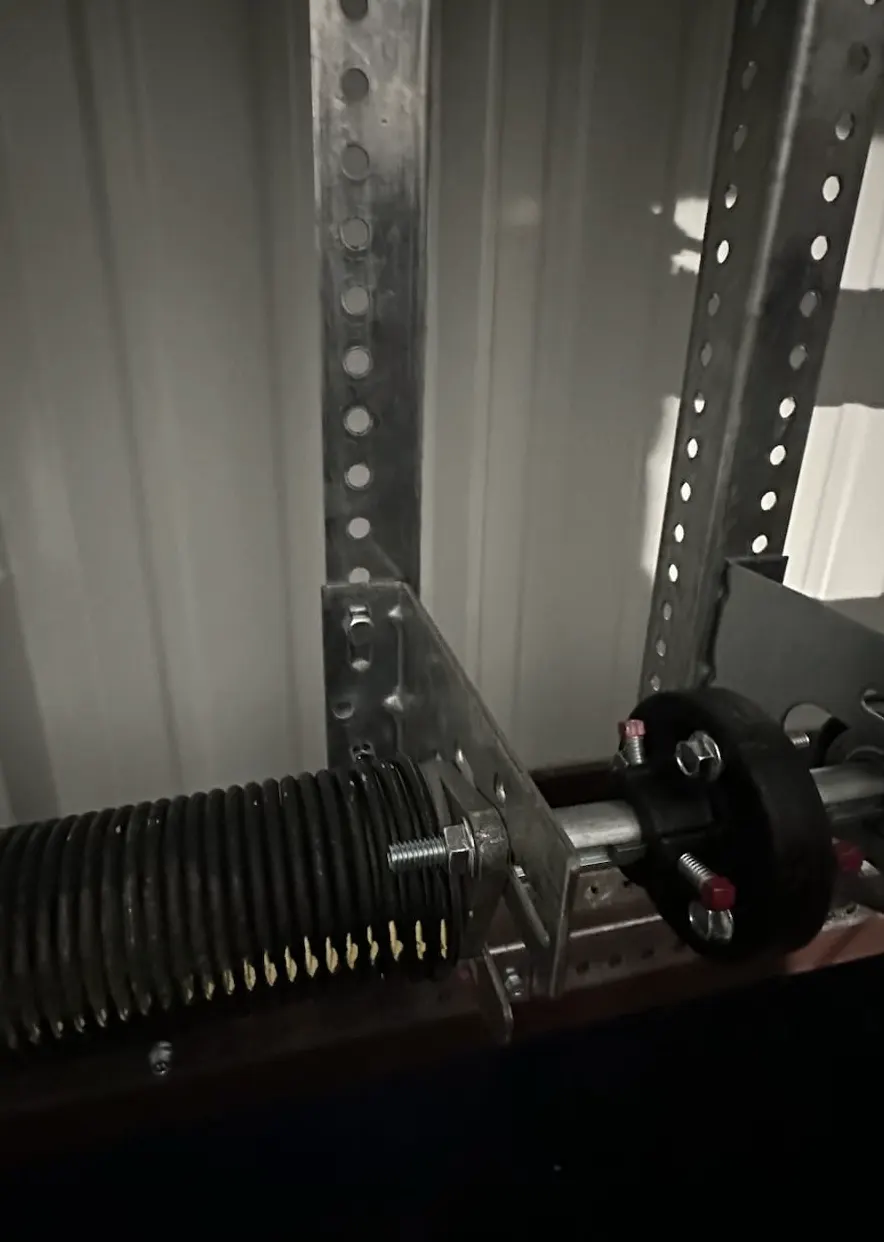
This is the part that causes the most injuries, and it's worth being direct about it. A garage door's springs — whether torsion springs mounted above the door or extension springs along the upper track — store enormous tension even when the door looks still. A derailed door often means that tension is unevenly distributed, which makes the springs and cables far less predictable than usual.
- Don't touch the springs or cables, even if they look loose or disconnected. They can release stored energy suddenly and with enough force to cause serious injury.
- Don't try to push the roller back into the track yourself. It usually requires releasing tension safely first, and doing it wrong can cause the door to drop.
- Don't disconnect the opener's emergency release unless you're confident the door is actually resting on something stable — if it's hanging off-track, releasing it can let it fall.
- Don't bend the track back by hand or try to hammer it into alignment. A track that's been forced straight after bending is weaker at that spot and tends to fail again under load.
When to Call White Plains Garage Door
A door off its track almost always needs hands-on diagnosis, because the fix depends on what actually caused it — a worn roller is a different repair than a bent track or a failing spring, and guessing wrong wastes time and sometimes makes the damage worse. This is exactly the kind of job our garage door repair technicians handle regularly: we assess whether the track, rollers, cables, or springs are the root cause, release tension safely, realign or replace the track as needed, and test the door through a full cycle before we leave. If the inspection turns up a worn or damaged spring — which is common once a door has been running unevenly for a while — we'll walk you through spring replacement options on the spot rather than patching around a part that's likely to fail again soon. If it happens after hours or on a weekend, our emergency service means you're not stuck waiting days with a door you can't trust.
If your garage door has jumped its track, don't wait for a second cold snap to see if it gets worse. Call White Plains Garage Door for prompt, honest service anywhere in White Plains, MD or the surrounding Charles County area — we'll get it diagnosed, repaired, and moving safely again.