
The Mistake Almost Everyone Makes First
When a garage door won't budge on a cold morning, the instinct is to hit the remote button again and again, or to haul on the manual release handle and muscle the door up by hand. It's tempting because it usually works on a normal day, and you're standing there in the cold with somewhere to be. But a door that's frozen to the slab or dragging from stiff hardware isn't being stubborn — something is physically resisting it, and forcing it can strip the opener's gears, snap a cable under load, or bend a track that was otherwise fine. The better first move is to figure out why it's stuck before you push harder against it.
Symptoms to Notice Before You Touch Anything
- The opener hums but the door doesn't move — motor is working, something downstream is blocked.
- A visible ice line along the bottom weatherstrip, where water pooled overnight and froze the seal to the concrete.
- The door creeps up a few inches, then stalls or reverses on its own.
- Grinding or squealing before the door even starts to move.
- The door opens manually but feels unusually heavy, like the springs aren't pulling their weight.
- Blinking lights on the opener or a sensor that won't clear.
Match what you're seeing to the list below — it's roughly the order a technician would check things, cheapest and most obvious first.
1. The Bottom Seal Is Frozen to the Slab
This is the most common cause in this area, especially after a freezing-rain night or the kind of icy mix that follows a heavy winter rain. The rubber astragal along the bottom of the door sits in a thin film of water, and overnight that water turns to ice, gluing the seal to the concrete.
What the fix involves: breaking the ice bond gently, not yanking the door against it. A flat-edged shovel or ice scraper worked carefully along the seal line usually frees it. Avoid pouring hot water on it — it just refreezes fast and adds more ice to the problem. If this happens repeatedly, the long-term fix is improving drainage at the threshold so water doesn't pool there in the first place.
2. Lubricant Has Thickened in the Cold
Rollers, hinges, and the track itself rely on lubrication to move smoothly. Standard grease and old, dirty lubricant stiffen up in cold temperatures, and that extra resistance is enough to make a door jerky or slow even when nothing is actually frozen.
What the fix involves: wiping down old grease and grit with a cloth, then applying a garage-door-specific silicone-based lubricant to the rollers, hinges, and track. Skip WD-40 and heavy automotive grease — they either evaporate too fast or thicken further in freezing temperatures, making the problem worse within a week or two.
3. Springs Are Under More Strain Than Usual
Metal contracts in cold weather, and torsion or extension springs that are already near the end of their life can lose a bit of flex right when the temperature drops. The result is a door that feels noticeably heavier to lift, or an opener that strains harder than it should on every cycle.
What the fix involves: inspecting the springs for gaps, rust, or visible wear, and replacing them if they're worn — not adjusting them. Springs are under enormous tension and this is not a homeowner repair; a technician uses the right tools and sets tension to match the door's exact weight.
4. Sensors or Opener Limits Are Off
The safety sensors near the bottom of the track can fog up with condensation on humid, cold mornings, or get nudged out of alignment, both of which will stop the door from closing or cause it to reverse. Cold can also cause the opener's travel limits to drift slightly out of calibration.
What the fix involves: wiping the sensor lenses clean, checking that both sensors are aimed at each other, and resetting the opener's open/close limits if needed.
5. Tracks Have Shifted Slightly
Older homes throughout Charles County often have garage structures that have settled a bit over the years, and cold temperatures make metal tracks contract just enough to expose a misalignment that wasn't obvious in warmer months. The door binds against the rollers instead of gliding.
What the fix involves: loosening track brackets, realigning the track so it's plumb and evenly spaced, and checking rollers for flat spots or wear that need replacing.
6. Opener Motor or Gears Are Worn
If a door has been dragging for a while, the extra strain of cold-weather resistance can be the thing that finally reveals worn gears, a stretched belt, or a tired motor. This is usually the last thing checked because it's the most involved repair.
What the fix involves: inspecting the gear kit and drive mechanism inside the opener housing, and repairing or replacing the unit if the internal parts are too worn to hold up through another winter.
When to Call White Plains Garage Door
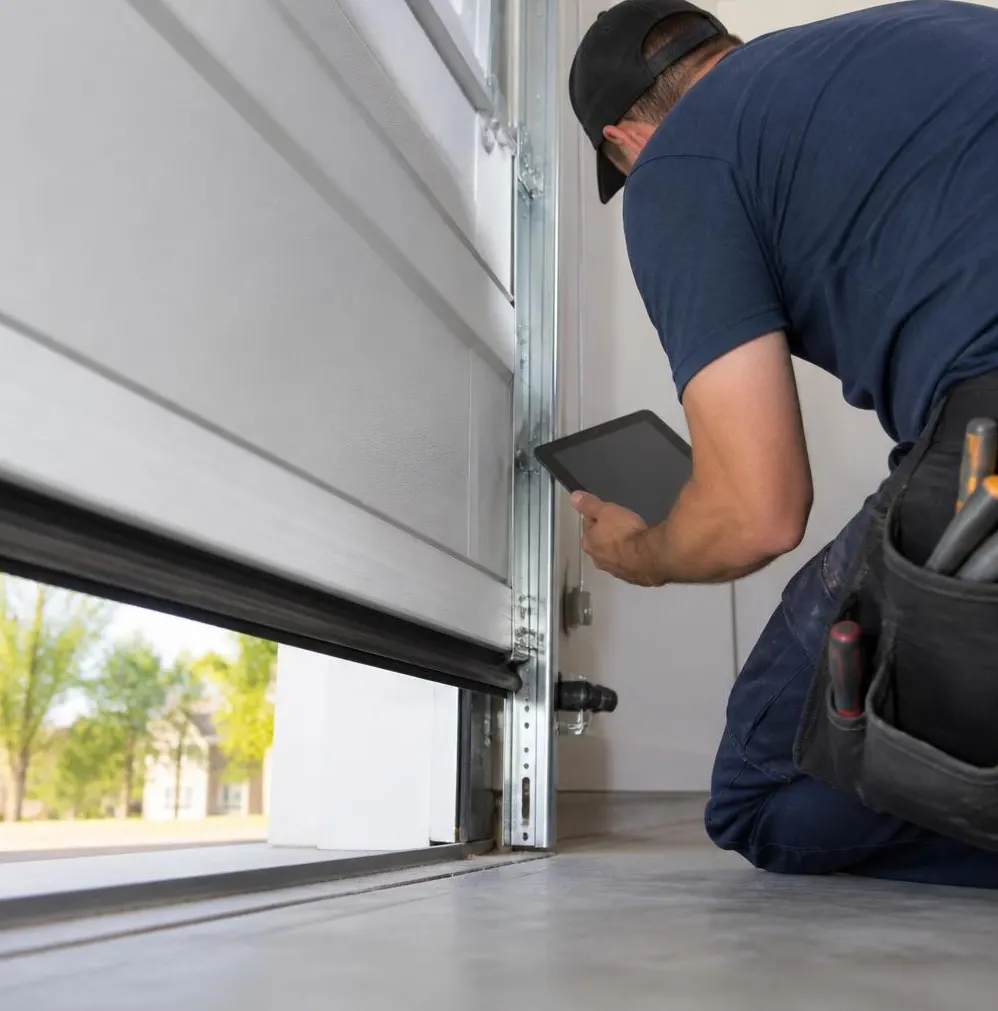
If your door is frozen to the slab more than once a season, feels heavier than it used to, or an opener is straining and you're hearing grinding before it moves, it's worth having it looked at rather than working around it all winter. We handle Garage Door Repair and Spring Replacement for homes throughout White Plains and the surrounding Charles County area, and if a door won't open at all during a cold snap, our Emergency Garage Door Service can get you moving the same day. We'll check the bottom seal, hardware, springs, sensors, and opener in that order, find the actual cause, and fix it once instead of guessing.
If your garage door is sticking, stalling, or freezing shut this winter, call White Plains Garage Door for garage door service in White Plains, MD 20695 and throughout Charles County — we'll get it moving the right way, not the hard way.